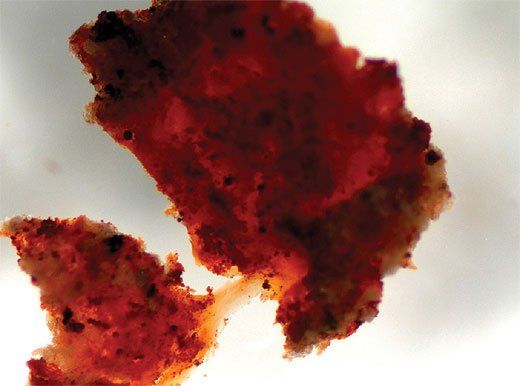
Criticisms of C-14 dating methods
The methods used to discover the presence of Carbon-14 (C-14) as a means for dating are suspect as that atomic element is subject to environmental influence, including the fall-out from nuclear explosions and extra-planetary impact.
The purpose for this page is to provide a database of dissenting information concerning C-14 dating, most prominently testing of soft-tissue collected from Dinosaur fossils. This page has articles skeptical of Carbon-14 dating methods, and an article in defense of the method. Secular historians need not debate religious merit, but to accommodate for the discrepancies in Carbon-14 dating, as this helps sustains the exploration of a new narrative model that may be yet free of conflicting religiously ideological tendencies.
A question to sum it all up: "
Either dinosaurs lived during historical times, or C-14 dating is horribly wrong!" Read more about "Dinosaure" and Drakons [
link]
* "
Errors are feared in carbon dating" (1990-05-31, nytimes.com) [
archive.is/HuRWK]
* "
CO2 emissions are ruining C14 readings" (q-mag.org/co2-emissions-are-ruining-c14-readings.html) [
archive.fo/wOwlZ]
* "
Fossil fuel emissions will complicate radiocarbon dating, warns scientist; By 2050 a new T-shirt could have the same radiocarbon date as a robe from a thousand years earlier" (2015-07-20, imperial.ac.uk) [
archive.fo/qAbze]
* "
Carbon Dating Gets a Reset; Climate records from a Japanese lake are providing a more accurate timeline for dating objects as far back as 50,000 years" (2012-10-18, scientificamerican.com) [
archive.is/Zj0H6]
* C-14 discrepancies found in the action of dating coal [
archive.is/Xh48e]
* "
SHROUD OF TURIN PICTURE TOUR" (by DR. JOHN DESALVO, gizapyramid.com) page 1 [
archive.is/rbzge], page 2 [
archive.is/QOTFA], page 3 [
archive.is/woSjH], page 4 [
archive.is/Kgcw4], page 5 [
archive.is/LiRxL]
* C-14 dating researchers specializing in dinosaur soft-tissue [
dinosaurc14ages.com] [
archive.is/fYYcT]
* "
Radiocarbon dating basic introduction" (dinosaurc14ages.com) [
archive.is/fYYcT], with dinosaur soft tissue
* "
Factors Affecting the Fluctuation of 14C Dating" (by Arnold Mendez) text [
archive.is/toBPT] (.pdf) [
is.gd/bRGL5q]
* "
‘Nuclear bomb’ carbon dating shows Greenland shark can live for 400yrs" (2016-08-12, rt.com) [
archive.is/gqAYU]
* "
Fossil fuel emissions will complicate radiocarbon dating; Fossil fuel emissions could soon make it impossible for radiocarbon dating to distinguish new materials from artefacts that are hundreds of years old" (2015-07-20, Imperial College London) [
is.gd/qGkBEQ]
* "
Radiocarbon Dating" (2010-03-04, atlantipedia.ie) [
archive.is/jQpsV]
"
THE PROBLEMS WITH CARBON-14 DATING" [
is.gd/GJtLV1]:
Carbon-14 dating is the standard method used by scientists to determine the age of certain fossilized remains. As scientists will often claim something to be millions or billions of years old (ages that do not conform to the Biblical account of the age of the earth), Christians are often left wondering about the accuracy of the carbon-14 method. The truth is, carbon-14 dating (or radiocarbon dating, as it’s also called) is not a precise dating method in many cases, due to faulty assumptions and other limitations on this method.
Carbon has a weight of twelve atomic mass units (AMU’s), and is the building block of all organic matter (plants and animals). A small percentage of carbon atoms have an atomic weight of 14 AMU’s. This is carbon-14. Carbon-14 is an unstable, radioactive isotope of carbon 12. As with any radioactive isotope, carbon-14 decays over time. The half-life of carbon 14 is approximate 5,730 years. That means if you took one pound of 100 percent carbon-14, in 5,730 years, you would only have half a pound left.
Carbon-14 is created in the upper atmosphere as nitrogen atoms are bombarded by cosmic radiation. For every one trillion carbon-12 atoms, you will find one carbon-14 atoms. The carbon-14 that results from the reaction caused by cosmic radiation quickly changes to carbon dioxide, just like normal carbon-12 would. Plants utilize, or “breath in” carbon dioxide, then ultimately release oxygen for animals to inhale. The carbon-14 dioxide is utilized by plants in the same way normal carbon dioxide is. This carbon-14 dioxide then ends up in humans and other animals as it moves up the food chain.
There is then a ratio of carbon-14 to carbon-12 in the bodies of plants, humans, and other animals that can fluctuate, but will be fixed at the time of death. After death, the carbon-14 would begin to decay at the rate stated above. In 1948, Dr. W.F. Libby introduced the carbon-14 dating method at the University of Chicago. The premise behind the method is to determine the ratio of carbon-14 left in organic matter, and by doing so, estimate how long ago death occurred by running the ratio backwards. The accuracy of this method, however, relies on several faulty assumptions.
First, for carbon-14 dating to be accurate, one must assume the rate of decay of carbon-14 has remained constant over the years. However, evidence indicates that the opposite is true. Experiments have been performed using the radioactive isotopes of uranium-238 and iron-57, and have shown that rates can and do vary. In fact, changing the environments surrounding the samples can alter decay rates.
The second faulty assumption is that the rate of carbon-14 formation has remained constant over the years. There are a few reasons to believe this assumption is erroneous. The industrial revolution greatly increased the amount of carbon-12 released into the atmosphere through the burning of coal. Also, the atomic bomb testing around 1950 caused a rise in neutrons, which increased carbon-14 concentrations. The great flood which Noah and family survived would have uprooted and/or buried entire forests. This would decrease the release of carbon-12 to the atmosphere through the decay of vegetation.
Third, for carbon-14 dating to be accurate, the concentrations of carbon-14 and carbon-12 must have remained constant in the atmosphere. In addition to the reasons mentioned in the previous paragraph, the flood provides another evidence that this is a faulty assumption. During the flood, subterranean water chambers that were under great pressure would have been breached. This would have resulted in an enormous amount of carbon-12 being released into the oceans and atmosphere. The effect would be not unlike opening a can of soda and having the carbon dioxide fizzing out. The water in these subterranean chambers would not have contained carbon-14, as the water was shielded from cosmic radiation. This would have upset the ratio of carbon-14 to carbon-12.
To make carbon-14 dating work, Dr. Libby also assumed that the amount of carbon-14 being presently produced had equaled the amount of carbon-12 – he assumed that they had reached a balance. The formation of carbon-14 increases with time, and at the time of creation was probably at or near zero. Since carbon-14 is radioactive, it begins to decay immediately as it’s formed. If you start with no carbon-14 in the atmosphere, it would take over 50,000 years for the amount being produced to reach equilibrium with the amount decaying. One of the reasons we know that the earth is less than 50,000 years old is because of the biblical record. Another reason we can know this is because the amount of carbon-14 in the atmosphere is only 78% what it would be if the earth were old.
Finally, Dr. Libby and the evolutionist crowd have assumed that all plant and animal life utilize carbon-14 equally as they do carbon-12. To be grammatically crass, this ain’t necessarily so. Live mollusks off the Hawaiian coast have had their shells dated with the carbon-14 method. These test showed that the shells died 2000 years ago! This news came as quite a shock to the mollusks that had been using those shells until just recently.
We’ve listed five faulty assumptions here that have caused overestimates of age using the carbon-14 method. The list of non-compliant dates from this method is endless. Most evolutionists today would conclude that carbon-14 dating is – at best – reliable for only the last 3000 to 3500 years. There is another reason that carbon-14 dating has yielded questionable results – human bias.
If you’ve ever been part of a medical study, you’re probably familiar with the terms “blind study” and “double-blind study”. In a blind study, using carbon-14 dating for example, a person would send in a few quality control samples along with the actual sample to the laboratory. The laboratory analyst should not know which sample is the one of interest. In this way, the analyst could not introduce bias into the dating of the actual sample. In a double-blind study (using an experimental drug study as an example), some patients will be given the experimental drug, while others will be given a placebo (a harmless sugar pill). Neither the patients nor the doctors while know who gets what. This provides an added layer of protection against bias.
Radiocarbon dates that do not fit a desired theory are often excluded by alleging cross-contamination of the sample. In this manner, an evolutionist can present a sample for analysis, and tell the laboratory that he assumes the sample to be somewhere between 50,000 years old and 100,000 years old. Dates that do not conform to this estimate are thrown out. Repeated testing of the sample may show nine tests that indicate an age of 5000 to 10,000 years old, and one test that shows an age of 65,000 years old. The nine results showing ages that do not conform to the pre-supposed theory are excluded. This is bad science, and it is practiced all the time to fit with the evolutionary model.
The Shroud of Turin, claimed to be the burial cloth of Christ, was supposedly dated by a blind test. Actually, the control specimens were so dissimilar that the technicians at the three laboratories making the measurements could easily tell which specimen was from the Shroud. This would be like taking a piece of wood and two marbles and submitting them to the lab with the instructions that “one of these is from an ancient ponderosa pine, guess which.” The test would have been blind if the specimens had been reduced to carbon powder before they were given to the testing laboratories. Humans are naturally biased. We tend to see what we want to see, and explain away unwanted data.
Perhaps the best description of the problem in attempting to use the Carbon-14 dating method is to be found in the words of Dr. Robert Lee. In 1981, he wrote an article for the Anthropological Journal of Canada, in which stated:
"The troubles of the radiocarbon dating method are undeniably deep and serious. Despite 35 years of technological refinement and better understanding, the underlying assumptions have been strongly challenged, and warnings are out that radiocarbon may soon find itself in a crisis situation. Continuing use of the method depends on a fix-it-as-we-go approach, allowing for contamination here, fractionation there, and calibration whenever possible. It should be no surprise then, that fully half of the dates are rejected. The wonder is, surely, that the remaining half has come to be accepted…. No matter how useful it is, though, the radiocarbon method is still not capable of yielding accurate and reliable results. There are gross discrepancies, the chronology is uneven and relative, and the accepted dates are actually the selected dates.”
The accuracy of carbon-14 dating relies on faulty assumptions, and is subject to human bias. At best, radiocarbon dating is only accurate for the past few thousand years. As we’ve seen though, even relatively youthful samples are often dated incorrectly. The Biblical record gives us an indication of an earth that is relatively young. The most reliable use of radiocarbon dating supports that position. This method of dating, overall, tends to be as faulty and ill conceived as the evolutionary model that is was designed to support.
===*===*===
Criticisms of Stratigraphy dating methods
* Critique of Guy Berthault's "Stratigraphy" [
archive.is/lYvrk];
Response by Guy Berthault to criticism of his "Stratigraphy" [
archive.is/yNaD0]
* "
Introduction to Sequence Stratigraphy" (.pdf) (earth.boisestate.edu) [
http://is.gd/KedtBp]
* "
Sequence Stratigraphy (revised)" (geo.arizona.edu) (.pdf) [
http://is.gd/W9Dmql]
* "
Growth rings on rocks give up North American climate secrets" (2016-01-11, news.berkeley.edu) [
archive.is/9hYOv]. Photo caption: Magnified photograph of a cross-section through a 3 mm-thick pedothem soil deposit from Wyoming. The line of dots are laser ablation sampling spots that are 0.1 mm in diameter. The innermost mineral material is about 150,000 years old, and becomes progressively younger towards the outside.

* "
Berthault's "Stratigraphy": Rediscovering What Geologists Already Know and Strawperson Misrepresentations of Modern Applications of Steno's Principles" (by Kevin R. Henke, Ph.D.) [
archive.is/lYvrk]
* "
Bacterial resistance to copper in the making for thousands of years; Genetic changes pose risks to human immunity" (2016-03-16, news.osu.edu) [
archive.is/OXxA8] [begin excerpt]: “About 2,000 years ago Romans were pumping a ton of copper dust into the environment,” Slot said. Ice cores from Greenland have supported this theory, showing likely high copper emissions during the time. [end excerpt]
* "
Mystery mummified monster discovered in Siberia diamond pit; Remains of a strange creature have been found by Siberian miners in diamond-yielding sands" (2016-08-10, ibtimes.co.uk) [
archive.is/nw76t] [begin excerpt]: A bizarre mummified creature has been discovered at the heart of a diamond mine in the Sakha Republic, in northern Siberia.
This ancient "monster" could date back to between 252 and 66 million years ago as it was found in sand deposits of that age.
The Siberian Times reports that the miners who found the remains had been working at the Udachnaya pipe diamond deposit, an open-pit diamond mine located just outside the Arctic Circle. [end excerpt]

* "
Idaho man finds mammoth tusk while digging on his property" (2016-08-08, AP Newswire) [
archive.is/tTf6z] [begin excerpt]: An Idaho man stumbled upon a rare find while using a backhoe to dig in a gravel pit on his property.
"It came to the point where I seen something weird or different inside the hill so I just stopped, kinda brushed off some of it," Kasey Keller of Preston told KIFI-TV (http://bit.ly/2aDYFrT ).
Upon closer inspection, the object Keller first thought was a plastic pipe or petrified wood appeared to be bone. He decided to call in the experts.
The object, according to Utah State University, was a 3½-foot tusk of a Columbian mammoth. It could be anywhere from 12,000 to 15,000 years old.
Both Utah State University and Brigham Young University took a piece of the tusk for carbon dating. [end excerpt]
===*===*===
"
The Bible and Radiometric dating (The Problem with Carbon 14 and other dating methods)"
[
https://web.archive.org/web/20140702102449/http://www.angelfire.com/mi/dinosaurs/carbondating.html]:
Many people are under the false impression that carbon dating proves that dinosaurs and other extinct animals lived millions of years ago. What many do not realize is that carbon dating is not used to date dinosaurs.
The reason? Carbon dating is only accurate back a few thousand years. So if scientists believe that a creature lived millions of years ago, then they would need to date it another way.
But there is the problem. They assume dinosaurs lived millions of years ago (instead of thousands of years ago like the bible says). They ignore evidence that does not fit their preconceived notion.
What would happen if a dinosaur bone were carbon dated? - At Oak Ridge National Laboratory, Scientists dated dinosaur bones using the Carbon dating method. The age they came back with was only a few thousand years old.
This date did not fit the preconceived notion that dinosaurs lived millions of years ago. So what did they do? They threw the results out. And kept their theory that dinosaurs lived "millions of years ago" instead.
This is common practice.
They they use potassium argon, or other methods, and date the fossils again.
They do this many times, using a different dating method each time. The results can be as much as 150 million years different from each other! - how’s that for an "exact" science?
They then pick the date they like best, based upon their preconceived notion of how old their theory says the fossil should be (based upon the Geologic column).
So they start with the assumption that dinosaurs lived millions of years ago, then manipulate the results until they agree with their conclusion.
Their assumptions dictate their conclusions.
So why is it that if the date doesn't fit the theory, they change the facts?
Unbiased science changes the theory to support the facts. They should not change the facts to fit the theory.
A Dinosaur carbon dated at 9,890 and 16,000 years old NOT millions of years old like evolutionists claim
I have documentation of an Allosaurus bone that was sent to The University of Arizona to be carbon dated. The results were 9,890 +/- 60 years and 16,120 +/- 220 years.
"We didn't tell them that the bones they were dating were dinosaur bones. The result was sample B at 16,120 years. The Allosaurus dinosaur was supposed to be around 140,000,000 years. The samples of bone were blind samples."
This test was done on August 10, 1990

Comment from a reader: "Of course carbon dating isn't going to work on your Allosaurus bone. That method is only accurate to 40,000 years. So I would expect to get some weird number like 16,000 years if you carbon date a millions of years old fossil. 16.000 years by the way is still 10,000 years before your God supposedly created the Earth." [signed] Amy M 12/11/01
My response: I explain the limits of Carbon dating below. One thing you might want to ask yourself though, is how do you know it is millions of years old, giving an "incorrect" date (one that you think is too young) or if it actually is only a few thousand years old.
As far as your comments that 16,000 years is older than when God created the earth, we know that there is more carbon in the atmosphere than there was a thousand years ago. So a date of 9,000 or 16,000 years is more likely to be less. Perhaps only 6,000 years old.
30,000 year limit to Carbon dating -
Carbon dating is a good dating tool for some things that we know the relative date of. Something that is 300 years old for example. But it is far from an exact Science. It is somewhat accurate back to a few thousand years, but carbon dating is not accurate past this. Thirty thousand years is about the limit. However, this does not mean that the earth is 30 thousand years old. It is much younger than that. (1)
Because of the earth’s declining magnetic field, more radiation (which forms C14) is allowed into the earth’s atmosphere.
Willard Libby (December 17, 1908 – September 8, 1980) and his colleagues discovered the technique of radiocarbon dating in 1949. Libbey knew that atmospheric carbon would reach equilibrium in 30,000 years. Because he assumed that the earth was millions of years old, he believed it was already at equilibrium. However each time they test it, they find more c14 in the atmosphere, and have realized that we are only 1/3 the way to equilibrium. (1)
- What does this mean? It means that based on c14 formation, the earth has to be less than 1/3 of 30,000 years old. This would make the earth less than 10,000 years old! (1)
Carbon dating is based on the assumption that the amount of C14 in the atmosphere has always been the same. But there is more carbon in the atmosphere now than there was 4 thousand years ago. (1)
Since carbon dating measures the amount of carbon still in a fossil, then the date given is not accurate. Carbon dating makes an animal living 4 thousand years ago (when there was less atmospheric carbon) appear to have lived thousands of years before it actually did.
What was the original amount of Carbon in the atmosphere?
A great book on the flaws of dating methods is "Radioisotopes and the age of the earth" (edited by Larry Vardiman, Andrew Snelling, Eugene F. Chaffin. Published by Institute for Creation Research; December 2000)
Dating methods are based on 3 unprovable and questionable assumptions ("Radioisotopes and the age of the earth" pg v):
1) That the rate of decay has been constant throughout time.
2). That the isotope abundances in the specimen dated have not been altered during its history by addition or removal of either parent or daughter isotopes
3) That when the rock first formed it contained a known amount of daughter material
We must recognize that past processes may not be occurring at all today, and that some may have occurred at rates and intensities far different from similar processes today. ("Radioisotopes and the age of the earth" pg vii)
To know if carbon dating is accurate, we would have to know how much carbon was in the atmosphere in the beginning, and also how long it has been increasing, or decreasing. Since no one was there, no one knows for sure. It's like trying to figure out how long a candle has been burning, without knowing the rate at which it burns, or its original size.
God cursed the ground (the rocks too!) -
See my commentary on Genesis 3 verse 17 "..cursed is the ground for your sake"
When this happened there was a burst of radioactity that made the rocks appear older than they were.
Wouldn't this make all the rocks appear the same age?
"The rock question is fairly simple and has to do with the basic elements which made up these rocks in the beginning. When each of these elements, uranium, potassium, radium etc. were switched on, it would only be natural for them to behave according to their individual properties, eventually acquiring stable half-lives of decay, at different rates. Let's say initially every radioactive element was "exploded" into existence from pre-existent elements. None of these early faster half-lives would be the same as they are today. As time progressed each would begin to acquire its slower modern-day stable half-life, but would they all acquire these stable rates in a uniformity which would keep them all in synchrony? I doubt it. If they did, all would give the same ages, you are right. Each would probably arrive at equilibrium at different times. Look at biological breakdown everywhere, it proceeds at different rates. Look at the world from a devolutionary viewpoint and see how perfection has been lost and breakdown has proceeded in spurts and stasis periods. Some of us have lost more information than others, that's why some are at Harvard, but others, more unfortunate, [the same] age struggle with debilitating genetic degenerative diseases like Lupus, MS, ALS, Crohn's and many other autoimmune diseases. The keys of which are locked in the "vault of degeneration knowledge" that evolutionists are unwilling to open for fear that we creationists might be correct." [signed] Jack Cuozzo 3/02
Carbon dates they did not like -

Carbon dating is frequently an embarrassment to Scientists.
Here are some Carbon 14 dates that were rejected because they did not agree with evolution
(If you do not see a chart below, then your web browser does not support tables - please email me for these dates)
Penguins:
Living penguins have been carbon dated and the results said that they had died 8,000 years ago! This is just one of many inaccurate dates given by Carbon dating.
Mollusks:
The shells of living mollusks have been dated using the carbon 14 method, only to find that the method gave it a date as having been dead for 23,000 years!(Science vol. 141 1963 pg. 634-637)
Dead seal:
The body of a seal that had been dead for 30 years was carbon dated, and the results stated that the seal had died 4,600 years ago! ("The Illustrated Origins Answer Book" by Paul Taylor)
--
Living seal
What about a freshly killed seal? Well, they dated one of those too, the results stated that the seal had died 1,300 years ago. (Antarctic Journal vol. 6 Sept-Oct 1971 pg. 211)
Antarctic seawater has a low level of C14. Consequently organisms living there dated by C14 give ages much older than their true age.
A lake Bonney seal known to have died only a few weeks before was carbon dated. The results stated that the seal had died between 515 and 715 years ago. (Antarctic Journal, Washington)
Snails:
Shells from living snails were dated using the Carbon 14 method. The results stated that the snails had died 27,000 years ago. (Science vol. 224 1984 pg. 58-61)
There are many more examples that I will add later. But the ones above give you a general idea.
There are other methods of dating. They too, give varied results.
Potassium-argon dating -
The potassium-argon method was used to date volcanic material in this next example.
"Scientists got dates of 164 million and 3 billion years for two Hawaiian lava flows. But these lava flows happened only about 200 years ago in 1800 and 1801. ("Dry bones and other fossils" by Dr. Gary Parker)
Volcanic ash has also been known to give dates much older than they actually were.
Lava flows at Mt Ngauruhoe, New Zealand gave erroneous dates (from K-Ar analyses) ranging from <0.27 to 3.5 (± 0.2) million years old. These rocks were "observed to have cooled from lavas 25-50 years ago".("Radioactive ‘dating’ failure: Recent New Zealand lava flows yield ‘ages’ of millions of years" by Andrew Snelling published in: Creation Ex Nihilo 22(1):18-21 December 1999 - February 2000)
The equipment was checked and the samples were run again to exclude the possibility of lab error but similar results were obtained.("Radioactive ‘dating’ failure: Recent New Zealand lava flows yield ‘ages’ of millions of years" by Andrew Snelling published in: Creation Ex Nihilo 22(1):18-21 December 1999 - February 2000)
Because the actual age of these rocks is known to be less than 50 years old, it is clear that these K-Ar ‘ages’ are due to ‘excess’ argon which was inherited from the magma source area deep in the earth.("Radioactive ‘dating’ failure: Recent New Zealand lava flows yield ‘ages’ of millions of years" by Andrew Snelling published in: Creation Ex Nihilo 22(1):18-21 December 1999 - February 2000)
See also the video: Mount St. Helens: Explosive Evidence for Catastrophe Dr. Steve Austin
Has the rate of decay remained constant?
The biggest problem with dating methods is the assumption that the rate of decay has remained constant. There is no way to prove it. In fact there is much evidence to show this rate has not remained constant, and that it is decaying quicker and quicker. Just what the bible, and a Devolution and degenerating model of the earth would predict.
A joke about Dinosaurs and dating Dinosaur Bones -
Some tourists in The American Museum of Natural History were marveling at the dinosaur bones on display. One of them asked the guard, "Can you tell me how old the dinosaur bones are?"
The guard replied, "They are 65 million, four years, and six months old."
"That's an awfully exact number," says the tourist. "How do you know their age so precisely?"
The guard answered, "Well, the dinosaur bones were sixty five million years old when I started working here, and that was four and a half years ago."
Carbon dating references:
1) From a video Lecture by Dr. Kent Hovind
6) Antarctic Journal, Washington
10) "Dry bones and other fossils" by Dr. Gary Parker
===*===*===
"
Answers to Creationist Attacks on Carbon-14 Dating"
by Christopher Gregory Weber for "Creation/Evolution" magazine (1982) [
https://web.archive.org/web/20141101230231/http://ncse.com/cej/3/2/answers-to-creationist-attacks-carbon-14-dating]:
Radiocarbon dating can easily establish that humans have been on the earth for over twenty thousand years, at least twice as long as creationists are willing to allow. Therefore it should come as no surprise that creationists at the Institute for Creation Research (ICR) have been trying desperately to discredit this method for years. They have their work cut out for them, however, because radiocarbon (C-14) dating is one of the most reliable of all the radiometric dating methods.
This article will answer several of the most common creationist attacks on carbon-14 dating, using the question-answer format that has proved so useful to lecturers and debaters.
Question: How does carbon-14 dating work?
Answer: Cosmic rays in the upper atmosphere are constantly converting the isotope nitrogen-14 (N-14) into carbon-14 (C-14 or radiocarbon). Living organisms are constantly incorporating this C-14 into their bodies along with other carbon isotopes. When the organisms die, they stop incorporating new C-14, and the old C-14 starts to decay back into N-14 by emitting beta particles. The older an organism's remains are, the less beta radiation it emits because its C-14 is steadily dwindling at a predictable rate. So, if we measure the rate of beta decay in an organic sample, we can calculate how old the sample is. C-14 decays with a half-life of 5,730 years.
Question: Kieth and Anderson radiocarbon-dated the shell of a living freshwater mussel and obtained an age of over two thousand years. ICR creationists claim that this discredits C-14 dating. How do you reply?
Answer: It does discredit the C-14 dating of freshwater mussels, but that's about all. Kieth and Anderson show considerable evidence that the mussels acquired much of their carbon from the limestone of the waters they lived in and from some very old humus as well. Carbon from these sources is very low in C-14 because these sources are so old and have not been mixed with fresh carbon from the air. Thus, a freshly killed mussel has far less C-14 than a freshly killed something else, which is why the C-14 dating method makes freshwater mussels seem older than they really are. When dating wood there is no such problem because wood gets its carbon straight from the air, complete with a full dose of C-14. The creationists who quote Kieth and Anderson never tell you this, however.
Question: A sample that is more than fifty thousand years old shouldn't have any measurable C-14. Coal, oil, and natural gas are supposed to be millions of years old; yet creationists say that some of them contain measurable amounts of C-14, enough to give them C-14 ages in the tens of thousands of years. How do you explain this?
Answer: Very simply. Radiocarbon dating doesn't work well on objects much older than twenty thousand years, because such objects have so little C-14 left that their beta radiation is swamped out by the background radiation of cosmic rays and potassium-40 (K-40) decay. Younger objects can easily be dated, because they still emit plenty of beta radiation, enough to be measured after the background radiation has been subtracted out of the total beta radiation. However, in either case, the background beta radiation has to be compensated for, and, in the older objects, the amount of C-14 they have left is less than the margin of error in measuring background radiation. As Hurley points out: "Without rather special developmental work, it is not generally practicable to measure ages in excess of about twenty thousand years, because the radioactivity of the carbon becomes so slight that it is difficult to get an accurate measurement above background radiation." (p. 108)
Cosmic rays form beta radiation all the time; this is the radiation that turns N-14 to C-14 in the first place. K-40 decay also forms plenty of beta radiation. Stearns, Carroll, and Clark point out that ". . . this isotope [K-40] accounts for a large part of the normal background radiation that can be detected on the earth's surface" (p. 84). This radiation cannot be totally eliminated from the laboratory, so one could probably get a "radiocarbon" date of fifty thousand years from a pure carbon-free piece of tin. However, you now know why this fact doesn't at all invalidate radiocarbon dates of objects younger than twenty thousand years and is certainly no evidence for the notion that coals and oils might be no older than fifty thousand years.
Question: Creationists such as Cook (1966) claim that cosmic radiation is now forming C-14 in the atmosphere about one and one-third times faster than it is decaying. If we extrapolate backwards in time with the proper equations, we find that the earlier the historical period, the less C-14 the atmosphere had. If we extrapolate as far back as ten thousand years ago, we find the atmosphere would not have had any C-14 in it at all. If they are right, this means all C-14 ages greater than two or three thousand years need to be lowered drastically and that the earth can be no older than ten thousand years. How do you reply?
Answer: Yes, Cook is right that C-14 is forming today faster than it's decaying. However, the amount of C-14 has not been rising steadily as Cook maintains; instead, it has fluctuated up and down over the past ten thousand years. How do we know this? From radiocarbon dates taken from bristlecone pines.
There are two ways of dating wood from bristlecone pines: one can count rings or one can radiocarbon-date the wood. Since the tree ring counts have reliably dated some specimens of wood all the way back to 6200 BC, one can check out the C-14 dates against the tree-ring-count dates. Admittedly, this old wood comes from trees that have been dead for hundreds of years, but you don't have to have an 8,200-year-old bristlecone pine tree alive today to validly determine that sort of date. It is easy to correlate the inner rings of a younger living tree with the outer rings of an older dead tree. The correlation is possible because, in the Southwest region of the United States, the widths of tree rings vary from year to year with the rainfall, and trees all over the Southwest have the same pattern of variations.
When experts compare the tree-ring dates with the C-14 dates, they find that radiocarbon ages before 1000 BC are really too young—not too old as Cook maintains. For example, pieces of wood that date at about 6200 BC by tree-ring counts date at only 5400 BC by regular C-14 dating and 3900 BC by Cook's creationist revision of C-14 dating (as we see in the article, "Dating, Relative and Absolute," in the Encyclopaedia Britannica). So, despite creationist claims, C-14 before three thousand years ago was decaying faster than it was being formed and C-14 dating errs on the side of making objects from before 1000 BC look too young, not too old.
Question: But don't trees sometimes produce more than one growth ring per year? Wouldn't that spoil the tree-ring count?
Answer: If anything, the tree-ring sequence suffers far more from missing rings than from double rings. This means that the tree-ring dates would be slightly too young, not too old.
Of course, some species of tree tend to produce two or more growth rings per year. But other species produce scarcely any extra rings. Most of the tree-ring sequence is based on the bristlecone pine. This tree rarely produces even a trace of an extra ring; on the contrary, a typical bristlecone pine has up to 5 percent of its rings missing. Concerning the sequence of rings derived from the bristlecone pine, Ferguson says: "In certain species of conifers, especially those at lower elevations or in southern latitudes, one season's growth increment may be composed of two or more flushes of growth, each of which may strongly resemble an annual ring. Such multiple growth rings are extremely rare in bristlecone pines, however, and they are especially infrequent at the elevation and latitude (37' 20' N) of the sites being studied. In the growth-ring analyses of approximately one thousand trees in the White Mountains, we have, in fact, found no more than three or four occurrences of even incipient multiple growth layers." (p. 840)
In years of severe drought, a bristlecone pine may fail to grow a complete ring all the way around its perimeter; we may find the ring if we bore into the tree from one angle, but not from another. Hence at least some of the missing rings can be found. Even so, the missing rings are a far more serious problem than any double rings.
Other species of trees corroborate the work that Ferguson did with bristlecone pines. Before his work, the tree-ring sequence of the sequoias had been worked out back to 1250 BC. The archaeological ring sequence had been worked out back to 59 BC. The limber pine sequence had been worked out back to 25 BC. The radiocarbon dates and tree-ring dates of these other trees agree with those Ferguson got from the bristlecone pine. But even if he had had no other trees with which to work except the bristlecone pines, that evidence alone would have allowed him to determine the tree-ring chronology back to 6200 BC. (See Renfrew for more details.)
So, creationists who complain about double rings in their attempts to disprove C-14 dating are actually grasping at straws. If the Flood of Noah occurred around 3000 BC, as some creationists claim, then all the bristlecone pines would have to be less than five thousand years old. This would mean that eighty-two hundred years worth of tree rings had to form in five thousand years, which would mean that one-third of all the bristlecone pine rings would have to be extra rings. Creationists are forced into accepting such outlandish conclusions as these in order to jam the facts of nature into the time frame upon which their "scientific" creation model is based.
Question: Creationist Thomas G. Barnes has claimed that the earth's magnetic field is decaying exponentially with a half-life of fourteen hundred years. Not only does he consider this proof that the earth can be no older than ten thousand years but he also points out that a greater magnetic strength in the past would reduce C-14 dates. Now if the magnetic field several thousand years ago was indeed many times stronger than it is today, there would have been less cosmic radiation entering the atmosphere back then and less C-14 would have been produced. Therefore, any C-14 dates taken from objects of that time period would be too high. How do you answer him?
Answer: Like Cook, Barnes looks at only part of the evidence. What he ignores is the great body of archaeological and geological data showing that the strength of the magnetic field has been fluctuating up and down for thousands of years and that it has reversed polarity many times in the geological past. So, when Barnes extrapolates ten thousand years into the past, he concludes that the magnetic field was nineteen times stronger in 4000 BC than it is today, when, actually, it was only half as intense then as now. This means that radiocarbon ages of objects from that time period will be too young, just as we saw from the bristlecone pine evidence.
Question: But how does one know that the magnetic field has fluctuated and reversed polarity? Aren't these just excuses scientists give in order to neutralize Barnes's claims?
Answer: The evidence for fluctuations and reversals of the magnetic field is quite solid. V. Bucha, a Czech geophysicist, has used archaeological artifacts made of baked clay to determine the strength of the earth's magnetic field when they were manufactured. He found that the earth's magnetic field was 1.5 times as strong as today around 1 AD, 1.6 times as strong around 400 BC, 0.8 times as strong around 2000 BC, and only 0.5 times as strong around 4000 BC. (See Bailey, Renfrew, and Encyclopedia Britannica for details.) In other words, it rose in intensity from 0.5 times its present value in 4000 BC to a peak of 1.6 times its present value in 400 BC, and it has been slowly declining since then. Even before the bristlecone pine calibration of C-14 dating was worked out by Ferguson, Bucha predicted that this change in the magnetic field would make radiocarbon dates too young.
"This idea [that the fluctuating magnetic field affects influx of cosmic rays, which in turn affects C-14 formation rates] has been taken up by the Czech geophysicist, V. Bucha, who has been able to determine, using samples of baked clay from archeological sites, what the intensity of the earth's magnetic field was at the time in question. Even before the tree-ring calibration data were available to them, he and the archeologist, Evzen Neustupny, were able to suggest how much this would affect the radiocarbon dates." (Renfrew, p. 76)
Not only that, but his predictions were confirmed in detail:
"There is a good correlation between the strength of the earth's magnetic field (as determined by Bucha) and the deviation of the atmospheric radiocarbon concentration from its normal value (as indicated by the tree-ring radiocarbon work)." (Renfrew, p. 76)
So, once we know all the magnetic data, we see that it really supports the tree-ring calibration of C-14 dating, rather than the conclusions of Cook and Barnes.
As for the question of polarity reversals, plate tectonics can teach us much. It is a fact that new oceanic crust continually forms at the mid-oceanic ridges and spreads away from those ridges in opposite directions. When lava at the ridges hardens, it keeps a trace of the magnetism of the earth's magnetic field. Therefore, every time the magnetic field reverses itself, bands of paleomagnetism of reversed polarity show up on the ocean floor alternated with bands of normal polarity. These bands are thousands of kilometers long, they vary in width, they lie parallel, and the bands on either side of any given ridge form mirror images of each other. Thus it can be demonstrated that the magnetic field of the earth has reversed itself dozens of times throughout earth history.
Barnes, writing in 1973, ought to have known better than to quote the gropings and guesses of authors of the early sixties in an effort to debunk magnetic reversals. Before plate tectonics and continental drift became established in the mid-sixties, the known evidence for magnetic reversals was rather scanty, and geophysicists often tried to invent ingenious mechanisms with which to account for this evidence rather than believe in magnetic reversals. However, by 1973, sea floor spreading and magnetic reversals had been documented to the satisfaction of almost the entire scientific community. Yet, instead of seriously attempting to rebut them with up-to-date evidence, Barnes merely quoted the old guesses of authors who wrote before the facts were known. But, in spite of Barnes, paleomagnetism on the sea floor conclusively proves that the magnetic field of the earth oscillates in waves and even reverses itself on occasion. It has not been decaying exponentially as Barnes maintains.
Question: Does outside archaeological evidence confirm theC-14 dating method?
Answer: Yes. When we know the age of a sample through archaeology or historical sources, the C-14 method (as corrected by bristlecone pines) agrees with the age within the known margin of error. For instance, Egyptian artifacts can be dated both historically and by radiocarbon, and the results agree. At first, archaeologists used to complain that the C-14 method must be wrong, because it conflicted with well-established archaeological dates; but, as Renfrew has detailed, the archaeological dates were often based on false assumptions. One such assumption was that the megalith builders of western Europe learned the idea of megaliths from the Near-Eastern civilizations. As a result, archaeologists believed that the Western megalith-building cultures had to be younger than the Near Eastern civilizations. Many archaeologists were skeptical when Ferguson's calibration with bristlecone pines was first published, because, according to his method, radiocarbon dates of the Western megaliths showed them to be much older than their Near-Eastern counterparts. However, as Renfrew demonstrated, the similarities between these Eastern and Western cultures are so superficial that the megalith builders of western Europe invented the idea of megaliths independently of the Near East. So, in the end, external evidence reconciles with and often confirms even controversial C-14 dates.
One of the most striking examples of different dating methods confirming each other is Stonehenge. C-14 dates show that Stonehenge was gradually built over the period from 1900 BC to 1500 BC, long before the Druids, who claimed Stonehenge as their creation, came to England. Astronomer Gerald S. Hawkins calculated with a computer what the heavens were like back in the second millennium BC, accounting for the precession of the equinoxes, and found that Stonehenge had many significant alignments with various extreme positions of the sun and moon (for example, the hellstone marked the point where the sun rose on the first day of summer). Stonehenge fits the heavens as they were almost four thousand years ago, not as they are today, thereby cross-verifying the C-14 dates.
Question: What specifically does C-14 dating show that creates problems for the creation model?
Answer: C-14 dates show that the last glaciation started to subside around twenty thousand years ago. But the young-earth creationists at ICR and elsewhere insist that, if an ice age occurred, it must have come and gone far less than ten thousand years ago, sometime after Noah's flood. Therefore, the only way creationists can hang on to their chronology is to poke all the holes they can into radiocarbon dating. However, as we have seen, it has survived their most ardent attacks.
Bibliography
Bailey, Lloyd R. 1978. Where Is Noah's Ark? Nashville, TN: Abington Press.
Barnes, Thomas G. 1973. Origin and Destiny of the Earth's Magnetic Field. San Diego: Creation-Life Publishers.
Cook, Melvin A. 1966. Prehistory and Earth Models. London: Max Parrish and Co., Ltd.
"Dating, Relative and Absolute." Encyclopaedia Britannica: Macropaedia, Vol. 5. 1974.
"Earth, Magnetic Field of." Encyclopaedia Britannica: Macropaedia, Vol. 5. 1974.
Fergusson, C. W. 1968. "Bristlecone Pine: Science and Aesthetics." Science 159:839-846.
Hawkins, Gerald S. 1965. Stonehenge Decoded. New York: Doubleday & Co.
Hurley, Patrick M. 1959. How Old Is the Earth? New York: Doubleday & Co.
Kieth, M. C., and Anderson, G. M. August 16, 1963. "Radiocarbon Dating: Fictitious
Results with Mollusk Shells." Science 141:634ff.
Kofahl, Robert E. 1977. The Handy Dandy Evolution Refuter. San Diego: Beta Books.
Morris, Henry M. (ed.) 1974. Scientific Creationism. San Diego: Creation-Life Publishers.
Renfrew, Colin. 1973. Before Civilization. New York: Alfred Knopf.
Slusher, Harold S. 1973. Critique of Radiometric Dating. San Diego: Creation-Life Publishers.
Stearns, Colin W., Carroll, Robert L., and Clark, Thomas H. 1979. Geological Evolution of North America, 3rd Edition. New York: John Wiley &
===*===*===
Criticisms of Dendrochronology
* "
Santorini tree rings support the traditional dating of the volcanic eruption" (2014-03-06, Swiss Federal Institute for Forest, Snow and Landscape Research WSL) [
archive.is/8wsQ0], summary: Will the dating of the volcanic eruption of Santorini remain an unsolved mystery? The question whether this natural disaster occurred 3,500 or 3,600 years ago is of great historiographical importance and has indeed at times been the subject of heated discussion among experts. After investigating tree rings, scientists have concluded that the volcano erupted in the 16th century BC, rather than any earlier than that.
* "
Eastern Europe: Tree rings reveal climate variability and human history" (2013-01-14, Swiss Federal Institute for Forest, Snow and Landscape Research WSL) [
archive.is/aUvWK], summary:
A total of 545 precisely dated tree-ring width samples, both from living trees and from larch wood taken from historical buildings in the northern Carpathian arc of Slovakia, were used to reconstruct May-June temperatures yearly back to 1040 AD. The tree-ring data from the Tatra Mountains best reflects the climate history of Eastern Europe, with a geographical focus on the Baltic.
===*===*===
Fossilisation / Rapid Petrifaction
* "
'Petrified' Objects in Two Weeks!" [
is.gd/dwdAKJ]:
Description & Explanation:
These "Petrified" objects took about two weeks to complete. Natural hot spring water (not any spring will do), with an extremely high mineral content, was used to spray these items. The chemistry of the water is completely natural and comes out of the ground at about 72 degrees Celsius. The water is high in carbonates and other residual minerals. The red-orange colouring of the objects is due to the high iron content of the water. The red-orange colouration is deposited during the drying phase. The iron in the water reacts with the oxygen in the air to form a hematite-limonite layer on the outside.
The roses are covered in an aragonite layer. They are neither permineralized nor petrified (If one wants to get technical). Most people, without a geology background, however, would just call them "petrified". They are, however, pretty neat. They show "rock" does not take a long time to form; "rock" only takes the right chemical and physical conditions to form.
Technically, the "petrified" teddy bears are partially "permineralized". Many dinosaur bones found in Alberta, Montana, and Saskatchewan are also only partially permineralized (like the teddy bears). Minerals, in the water, permeate the open structure of the teddy bears, causing the minerals to precipitate within the structure. The "Rock" deposit, in this case, is Aragonite. This is exactly the same type of process that formed most of the dinosaur bone fossils here in Alberta, Montana, and many other localities (The process of permineralization). The dinosaur bones would have stood in water, or in sediment with water percolating through it. The water carried minerals in solution into the bone which then crystallized within the bone spaces. As has been pointed out by dinosaur experts, most fossilized dinosaur bone still has much of the original bone present - it has just been infilled with minerals. So, technically, dinosaur bones have not been "turned to stone"; they have been "infilled with stone". Dr. Philip Currie, Formerly from the Royal Tyrell Museum of Paleontology in Alberta, has said that modern bones that fall into mineral springs can permineralize in a few weeks. Does it really take thousands or millions of years for fossilization or petrification to occur. Provably not! Though this is not really even a scientific issue anymore, many people still believe that these types of processes must take thousands and millions of years. They, therefore, have a difficult time believing what most of the early geologists believed, that the earth was young, and most of the fossils formed as a result of Noah's flood (only thousands of years ago).
Besides demonstrating that fossilization says nothing about millions of years, these objects are pretty neat in-and-of themselves.
Close-up of a "Petrified" Teddy Bear

Close-up of "Petrified" Paper Rose

* "
This is a fossil tree travelling through millions of years of strata" [
archive.is/ae9EW#selection-1187.0-1187.68]


* "
40 Million year old Cowboy boot found!" [
archive.is/mdRGs]: Everyone has heard the story. "We know absolutely for certain, it takes millions and millions of years for fossils to petrify." It's so obvious that no proof is necessary and of course no witnesses verify. The claim is just repeated over and over. So we hear, "Everybody knows that." Oh yea? How old do you think this boot could be? Millions and millions of years old? I suppose it could be made from T. Rex skin. Do you really think so? The rubber-soled boot with petrified cowboy leg, bones and all was found in a dry creek bed near the West Texas town of Iraan, about 1980 by Mr. Jerry Stone, an employee of Corvette oil company. The boot was hand made by the M. L. Leddy boot company of San Angelo, Texas which began manufacturing boots in 1936. Gayland Leddy, nephew of the founder, grew up in the boot business and now manages Boot Town in Garland, Texas. He recognized the "number 10 stitch pattern" used by his uncle?s company and concluded that the boot was made in the early 1950's. Only the contents of the boot are fossilized, not the boot itself, demonstrating that some materials fossilize more readily than others. The bones of the partial leg and foot within the boot were revealed by an elaborate set of C.T. Scans performed at Harris Methodist Hospital in Bedford, Texas on July 24, 1997. The Radiologic Technician was Evelyn Americus, AART. A complete set of these scans remains with the boot at the Creation Evidence Museum in Glen Rose, Texas. The fact that some materials can fossilize rapidly under certain circumstances is well known by experts in the field and is not really a scientific issue. However, the general public has been misled in order to facilitate the impression of great ages. The dramatic example of the "Limestone Cowboy" immediately communicates the truth of the matter. Fossilization proves nothing about long periods of time.
So what do you think? Could it be possible that those dino fossils aren't actually as old as you've been told they are?
* "
The Limestone Cowboy" (bible.ca) [
archive.is/xVWAG], photos [
archive.is/Ldhoi] [
archive.is/X1WAY] [
archive.is/aQBNE], accompanied by the "
Fossilized Hat of Rock" [
archive.is/OWIy5]
* "
'The Limestone Cowboy' An alleged fossilized leg in a cowboy boot" (2006, by Glen J. Kuban) [
archive.is/FZYkP]

* "
FAST and YOUNG! Evidence of Young Earth Evidence" (by Anti-Creationist, William D. Stansfield, Prof. Biological Sciences, California Polytechnic State University, via bible.ca) [
archive.is/Z0yhP]:
Note: Stansfield is an evolutionist. He believes the earth is billions of years old. But he is honest enough to concede that many scientific facts do give evidence of a young earth.
Water From Volcanoes -
"It has been estimated that seventy volcanoes the size of Mexico's Paricutin producing 0.001 cubic mile of water per year for 4.5 billion years of earth's history could account for the 315 cubic miles of water in the oceans today. There are now approximately 600 active volcanoes and about 10,000 dormant ones. Six hundred volcanoes comparable to Paricutin could account for the present oceans in approximately 0.5 billion years."
Uranium In the Oceans -
"Uranium salts presently appear to be accumulating in the oceans at about 100 times the rate of their loss. It is estimated that 60,000,000,000 grams of uranium is added to the oceans annually. Under uniformitarian rules, the total concentration of uranium salts of the oceans (estimated at less than 1E+17 grams) could be accumulated in less than one million years.
Helium In the Atmosphere -
"The atmospheric content of helium-4 (the most abundant isotope of helium) has accumulated from the radioactive decay of uranium and thorium in the earth's crust and oceans, from nuclear reactions caused by cosmic rays, and from the sun. If the present rate of accumulation has been constant throughout four billion years of the earth's history, there should be thirty times as much helium in our present atmosphere as is presently there."
Meteoric Dust In Strata -
"One estimate of meteoric dust settling to earth places it at 14.3 million tons annually. If this rate has been constant throughout five billion years of geologic history, one might expect over fifty feet of meteorite dust to have settled all over the surface of the earth. ... The average meteorite contains about three hundred times more nickel than the average earth rock."
Meteorites In Strata -
"No meteorites have been found in the geological column."
Lava In The Crust -
"It has been estimated that four volcanoes spewing lava at the rate observed for Paricutin and continuing for five billion years could almost account for the volume of the continental crusts. The Colombian plateau of northwestern United States (covering 200,000 square miles) was produced by a gigantic lava flow several thousands of feet deep. The Canadian shield and other extensive lava flows indicate that volcanic activity has indeed followed an accelerated tempo in the past. The fact that only a small percentage of crystal rocks are recognizably lavas...."
Pressure In Oil Reservoirs -
"Some geologist find it difficult to understand how the great pressures found in some oil wells could be retained over millions of years."
Human Population Dynamics -
"If humanity is really about 2.5 million years old (as claimed by Dr. Louis Leakey), creationist calculate from conservative population estimates (2.4 children per family, average generation and life span of forty-three years) that the world population would have grown from a single family to 10 to the 2700th power of people over one million years. The present world population is about 2x10 to the 9th power, an infinitesimal part of the 10 to the 2700th power."
Radiocarbon In Atmosphere -
"It now appears that the C14 decay rate in living organisms is about 30 per cent less than its production rate in the upper atmosphere. Since the amount of C14 is now increasing in the atmosphere, it may be assumed that the quantity of C14 was even lower in the past than at the present. This condition would lead to abnormally low C14/C12 ratios for the older fossils. Such a fossil would be interpreted as being much older than it really is. ... Creationists argue that since C14 has not yet reached its equilibrium rate, the age of the atmosphere must be less than 20,000 years old."
Dr. Stansfield's "Answer":
"By this methodology, creationists stand guilty of the "crime" they ascribe to evolutionists, namely uniformitarianism. All the above methods for dating the age of the earth, its various strata, and its fossils are questionable, because the rates are likely to have fluctuated widely over earth history. A method that appears to have much greater reliability for determining absolute ages of rocks is that of radiometric dating."
But He Acknowledges:
"If we assume that (1) a rock contained no Pb206 when it was formed, (2) all Pb206 now in the rock was produced by radioactive decay of U238, (3) the rate of decay has been constant, (4) there has been no differential leaching by water of either element, and (5) no U238 has been transported into the rock from another source, then we might expect our estimate of age to be fairly accurate. Each assumption is a potential variable, the magnitude of which can seldom be ascertained. In cases where the daughter product is a gas, as in the decay of potassium (K40) to the gas argon (Ar 40) it is essential that none of the gas escapes from the rock over long periods of time.
Stanfield's Conclusion:
It is obvious that radiometric techniques may not be the absolute dating methods that they are claimed to be. Age estimates on a given geological stratum by different radiometric methods are often quite different (sometimes by hundreds of millions of years). There is no absolutely reliable long-term radiological 'clock."' SCIENCE OF EVOLUTION, pp. 80-84.
* Iron Hammer of the Lower Cretaceous [
archive.is/ae9EW#selection-1219.0-1219.7]
* "
The London Artifact" (retrieved from creationevidenceorg) [
archive.is/QEMdA], photo caption: The wood handle is partially coalifed with quartz and calcite crystalline inclusions. Tests performed at Battelle Laboratory document the hammer's unusual metallurgy, 96% iron, 2.6% chlorine and .74% sulfur (no carbon). Density test indicate casting of exceptional quality. A unique coating of FeO, which does not readily form under present atmospheric conditions, appears to inhibit rusting. Found in a formation famous for its dinosaurs, supposed to be 140 million years old (lower cretaceous).

Miners in South Africa have been digging up mysterious metal spheres. Origin unknown, these spheres are etched with three parallel grooves running around the equator. Two types of spheres have been found: one is composed of a solid bluish metal with flecks of white; the other is hollowed out and filled with a spongy white substance. The kicker is that the rock in which they where found is Precambrian - and dated to 2.8 BILLION years old! Who made them and for what purpose is unknown.

* "
Iron Pot Embedded in a Large Lump of Coal" [
archive.is/xz8WK]
* "
Stones that grow by themselves" (2009-06, surprising-romania.blogspot.nl) [
archive.is/rRzBM].
Trovants, the growing stones of Romania. The stones grow when it rains from the process of concretion.

* "
The Crystal Maiden of the Actun Tunichil Muknal Cave; Belize cave containing the sparkling, calcite covered skeletons of Mayan children, sacrificed to the rain god" (retrieved 2017-02-01, atlasobscura.com) [
is.gd/KwNAsg]
The skeleton of an eighteen-year-old girl lies legs akimbo on the cave floor, two of her vertebrae crushed. She is known as the Crystal Maiden, and after a thousand years, she has newfound celebrity


===*===*===
* "
Systematic excavation of dinosaur fossils launched in NE China" (2017-05-27, news.xinhuanet.com) [
archive.fo/i74iy]
* "
What lies beneath: Melting Siberian permafrost has revealed some terrifying creatures" (2018-01-01, rt.com) [
archive.is/RMuIZ] [begin excerpt]:
The Siberian unicorn – long believed to have died out 350,000 years ago – was actually still alive as recently as 29,000 years ago, according to the analysis of a well-preserved skull found in the Pavlodar region of Kazakhstan.
Unicorn enthusiasts will be disappointed to learn that the extinct creature – also known as Elasmotherium sibiricum – had more in common with rhinos or woolly mammoths than fictional unicorns, however.
It is believed to have been up to 2 meters (6.6ft) tall, and 4.5 meters (14.7ft) in length. It weighed in at a whopping four tons, and was equipped with a large horn in the middle of its forehead.
Researchers at Tomsk State University managed to date the furry beast to around 29,000 years ago, thanks to radiocarbon-dating techniques. They believe the specimen discovered in Kazakhstan was a male but have yet to determine the cause of its death.
"Most likely, the south of Western Siberia was a refugium, where this rhino persevered the longest in comparison with the rest of its range," said Andrey Shpanski, one of the researchers, as cited by Science Alert [
archive.is/3Pswe].
"There is another possibility that it could migrate and dwell for a while in the more southern areas." [end excerpt]
- Photo caption: Fossil of Elasmotherium -- taken the photo at Natural History Museum, London